Virtual Staging Disclosure Rules: US MLS + EU AI Act
Where virtual staging disclosure must go: NAR ethics, California AB 723, Wisconsin Act 69, seven MLS rulebooks and the EU AI Act — with exact rule quotes.
By Derek Li · Updated October 11, 2026 · 15 min read
Yes — virtual staging is legal in the United States and across the EU, provided the staged image is disclosed. Every authority that has examined the question, from NAR's ethics enforcers to the California legislature, lands in the same place: the problem is never the furniture, it's the concealment. The genuinely hard question is where the virtual staging disclosure has to live — on the image, in the photo caption, at the start of the public remarks, or beside the unedited original — and the answer depends on four separate rule layers in the US (NAR ethics, two state statutes, state regulator guidance, and your MLS's rulebook) plus one uniform deadline in the EU. This page maps all of them, with the exact rule text and a primary source for every claim, because current coverage doesn't: one state association Q&A here, an MLS help page there, and vendor blogs recycling each other's errors. (Disclosure: roompano, which runs this site, is an AI virtual staging tool whose exports carry an automatic visible label plus C2PA content credentials.)
The four layers at a glance
The US has no single national law on virtual staging disclosure. What it has is a stack, and each layer has its own enforcer and its own penalty. Layer 1 applies if you're a REALTOR®; layer 2 if the property is in California or, from 2027, Wisconsin; layer 3 depends on your state regulator; and layer 4 — the one most likely to bite in practice — is the contract you signed with your MLS.
| Layer | What it is | Who it binds | Who can punish you, and how |
|---|---|---|---|
| 1. NAR Code of Ethics, Article 12 | Industry ethics, not law | REALTORS® (NAR members) | Local association ethics hearing: warning, fine, suspension, expulsion — never license revocation |
| 2. State statutes | Actual law — only California (2026) and Wisconsin (2027) have one | Anyone marketing property in those states | California: a knowing violation is a misdemeanor |
| 3. State regulator guidance | Non-statutory reading of existing license law (e.g., North Carolina) | State licensees | License discipline under misrepresentation rules |
| 4. MLS rules | The contract you signed to post listings | MLS participants | Image removal and fines (Stellar: automatic Level I fine; ARMLS: $200 from December 2026) |
| EU: AI Act, Article 50 | Regulation, uniform across all member states | Anyone publishing AI-modified realistic imagery in the EU | Labeling obligation from August 2, 2026 |
The EU skipped the stack entirely — one rule, one deadline, covered below.
NAR's "true picture" standard
The US national baseline is an ethics code, and it predates AI staging by decades. Article 12 of the NAR Code of Ethics (amended 1/08) reads:
"REALTORS® shall be honest and truthful in their real estate communications and shall present a true picture in their advertising, marketing, and other representations."
That "true picture" phrase is the hook nearly every US discussion of staged photos hangs on (Article 12 PDF). There is no staging-specific NAR standard. The other relevant text is Standard of Practice 12-10(2), which prohibits "manipulating… listing and other content in any way that produces a deceptive or misleading result." An unlabeled staged photo that leads a buyer to believe a room is furnished, or that a defect doesn't exist, fits that description comfortably.
What enforcement looks like: a complaint goes to a local-association ethics hearing, which can issue a warning, a fine, a suspension, or expulsion from the association. What an ethics hearing cannot do is touch your license — licensing is a state matter, which is exactly why layers 2 and 3 exist.
The two state laws: California and Wisconsin
Only two states have put virtual staging disclosure into statute. If a blog tells you otherwise — and several currently do — ask it for a citation; the myths section below has more on that.
California AB 723 — in force since January 1, 2026
The first state law in the country. AB 723 was signed on October 10, 2025, codified as Business & Professions Code § 10140.8, and took effect January 1, 2026. It imposes two obligations on any digitally altered listing image:
- a disclosure that is "reasonably conspicuous and located on or adjacent to the image", and
- "a link to a publicly accessible internet website, URL, or QR code that includes, and clearly identifies, the original, unaltered image."
The statute defines "digitally altered" as using editing software or AI "to add, remove, or change elements" — fixtures, furniture, landscaping, window views, neighboring property, structural features. Routine photographic work is explicitly excluded: lighting, sharpening, white balance, color correction, angle, straightening, cropping, exposure. Ordinary photo editing stays legal without any label; changing what the property appears to contain is what triggers the duty. The law applies to all marketing channels, and a knowing violation is a misdemeanor (full bill text).
California's MLSs converted the statute into upload rules almost immediately. SDMLS published AB 723 requirements for its members, and MLSListings requires labels like "altered," "digitally altered," or "AI altered" plus submission of the original images.
Wisconsin 2025 Act 69 — effective January 1, 2027
Wisconsin's law, Wis. Stat. § 452.136(1m), is titled "Advertising enhanced by technology": advertising that uses technology, including AI, to add, remove, or change elements of a property in a way that creates a misleading impression must be disclosed. It takes effect January 1, 2027, and the state's MLS infrastructure is moving early — METRO MLS has already published photo upload requirements covering originals, altered versions, and watermarks.
The layer below the statutes: regulator guidance (North Carolina)
Most states have neither a statute nor a pending bill, and their regulators answer the question by interpreting existing license law. North Carolina is the clearest documented example. Per NC Real Estate Commission counsel guidance, relayed in an NC REALTORS Q&A, virtual staging is legal if "(a) any advertising using virtual staging is not misleading, and (b) the advertising includes proper disclosure that images have been altered" — specifically "a conspicuous disclosure that some photographs have been altered to depict furniture or other interior decorating features that do not actually exist in the home" in the MLS public remarks. The guidance also draws the line that recurs in every rulebook on this page: staging may not be used to hide disrepair or eyesores. The legal hook is license law on misrepresentation — no new statute required to discipline you.
MLS rules: the four schools of virtual staging disclosure
This is the layer that actually reaches most agents, and the most fragmented one. Researching this article meant reading seven MLS rulebooks and policy PDFs end to end, and the surprise wasn't strictness — it was disagreement. The baseline is near-unanimous: staging is allowed; disclosure is required (or, at the loosest MLS, strongly recommended); and only personal property (furniture) may be altered, never fixtures, views, defects, or power lines. On the question of where the disclosure must live, the rulebooks split into four schools.
| School | Where the disclosure must live | Example MLS | Rule |
|---|---|---|---|
| 1. Remarks | The listing's REMARKS field | CVR MLS (Richmond, VA) | 5.8.2 |
| 2. Fixed sentence + dedicated field | Photo caption + checkbox + first words of public remarks | Stellar MLS (FL, 3rd largest in the US) | Art. 04.04 |
| 3. On-image watermark | On the image itself | ARMLS (AZ); Canopy MLS (NC/SC) | 8.23; 1.18.1 |
| 4. Original-photo pair | Original unedited photo published immediately before/after | CRMLS (CA, largest in the US) | 11.5.2 |
School 1: say it in the remarks (CVR MLS)
The oldest and loosest school. CVR MLS Rule 5.8.2 (Richmond, Virginia): "If a photo has been altered, manipulated or enhanced by virtual staging, then agent must make such disclosure in REMARKS field." One sentence in the remarks and you're done.
School 2: a fixed sentence plus a dedicated field (Stellar MLS)
Stellar MLS — Florida, the third-largest MLS in the US — prescribes the exact words. Under Article 04.04 of its Rules and Regulations, disclosure is "required in the specified field, namely the photo description entry field by adding the words 'Virtually staged' and by checking the virtually staged field. Additionally, the first words of the public remarks must read 'One or more photo(s) was virtually staged.'"
Stellar's rulebook is worth reading even if you'll never list in Florida, because its prohibitions are the most explicit anywhere. No virtual staging on pre-construction or under-construction listings. No exterior staging (movable furniture excepted). No altering fixtures. No impossible views — the rule's own example is "editing in a view of the gulf/ocean…". No concealing defects such as "holes in the wall, exposed wiring, damaged flooring". And the subtlest one: no "placing small furniture to make a room appear larger". The penalty is image removal plus an automatic fine (Level I).
School 3: a watermark on the image itself (ARMLS, Canopy)
The newest school, and where the US is visibly heading. ARMLS Rule 8.23 (Arizona) requires a "Digitally Altered" watermark on the image plus the original uploaded immediately adjacent. It took effect May 28, 2026, runs a six-month education period, then switches to $200 fines from December 2026. Routine adjustments — brightness, contrast, color grading, cropping, sharpening — are exempt, provided they don't misrepresent the property.
Canopy MLS Section 1.18.1 (North and South Carolina) is the bluntest rule text in this article: images "must include a clear, readily visible disclosure directly ON the image… Disclosure provided ONLY in captions, agent remarks, or supplemental text is NOT acceptable." It also requires the pair: "A nonstaged (original) image MUST be included immediately before or after…". If your habit is a polite sentence in the remarks, Canopy explicitly rejects it.
School 4: publish the original next to the edit (CRMLS)
CRMLS — California, the largest MLS in the US — anchors its Rule 11.5.2 guidance on the photo pair: "When adding a digitally enhanced image to the MLS, the original, unaltered version must appear in the listing immediately before or after the digitally enhanced image." A label goes in the photo description — "digitally enhanced," "digitally altered," or "virtually staged". Two details worth flagging because they surprise people: virtually removing furniture also counts as altered, and "AI-generated landscaping images are not permitted".
The loose end of the spectrum
Not every MLS has picked a school. Bright MLS (Mid-Atlantic, one of the largest in the country) says in its Policy on Images (February 28, 2024) that "Virtually-staged photo(s)/rendering(s) must be disclosed in the MLS" — without specifying where. The substance rules are still firm: only personal property may be added or changed, impossible views are banned, and so is "removing power lines, water towers, or nearby highways"; Bright may remove nonconforming images. NorthstarMLS (Minnesota/Wisconsin) is looser still: as of March 2026 it calls disclosure "a best practice to add disclosure to the photo or photo captions", with more guidance announced. Wisconsin's statute arrives January 2027, so that page will not stay loose for long.
The EU: one rule, one deadline
While US requirements vary MLS by MLS, the EU wrote a single sentence for the whole continent. Article 50 of the AI Act (Regulation (EU) 2024/1689) requires that from August 2, 2026, AI-generated or AI-modified realistic imagery be labeled — visibly and in machine-readable form. A listing photo that AI has furnished, redecorated, or otherwise realistically modified falls under it, in every member state, with no per-market variation to look up.
The machine-readable half is the part that changes workflows. A caption satisfies a human reader; Article 50 also expects software to be able to detect the label, which is what content-credential standards exist for. (roompano's exports carry an automatic visible label plus C2PA content credentials, designed to satisfy both halves of Article 50 — and roompano runs this site, so weigh that sentence accordingly.) In our comparison of staging tools, only two of eight ship any disclosure feature at all; that column is worth checking before you commit, because retrofitting labels onto a season's worth of exports is exactly the chore a tool should absorb for you.
The timeline: rules are tightening fast
- October 10, 2025 — California AB 723 signed.
- January 1, 2026 — AB 723 takes effect; CRMLS, SDMLS and MLSListings publish implementation rules.
- May 28, 2026 — ARMLS "Digitally Altered" watermark rule takes effect, with a six-month education period.
- August 2, 2026 — EU AI Act Article 50 labeling obligation begins across all member states.
- December 2026 — ARMLS starts issuing $200 fines.
- January 1, 2027 — Wisconsin Act 69 takes effect.
Six milestones in fifteen months, after decades in which the only text on point was NAR's one-sentence "true picture" standard. If your disclosure habits were formed before 2025, assume they're out of date.
The virtual staging disclosure checklist that satisfies everyone
You could memorize your own MLS's school and do the minimum. The simpler play is the maximum common denominator: follow the strictest rule at each step — Canopy's watermark, AB 723's original-image link, Stellar's remarks sentence — and every other rulebook on this page is satisfied along the way.
- Put a visible label on the image itself. A watermark or corner label like "Virtually staged" covers the on-image school (Canopy, ARMLS) and California's "reasonably conspicuous… on or adjacent" standard at once.
- Keep the original, and publish it immediately adjacent — or link to it. Covers the CRMLS pair rule, Canopy's before/after requirement, and AB 723's website/URL/QR obligation.
- Open the public remarks with a disclosure sentence. Stellar's exact wording — "One or more photo(s) was virtually staged." — also satisfies the remarks school (CVR) and North Carolina's guidance in one stroke.
- Alter furniture only — never fixtures, views, or defects. The unanimous baseline of every rulebook cited here. If the radiator, the power line, or the hole in the wall is gone from the render, no disclosure sentence will save the image.
- From August 2, 2026, add machine-readable marking for the EU. Visible label plus embedded content credentials, so both halves of Article 50 are addressed.
None of this adds cost. Virtual staging itself has a price; the label on top of it costs zero, and even the output of a free staging tool can be labeled by hand in the photo editor you already own. Disclosure is a habit, and a cheap one.
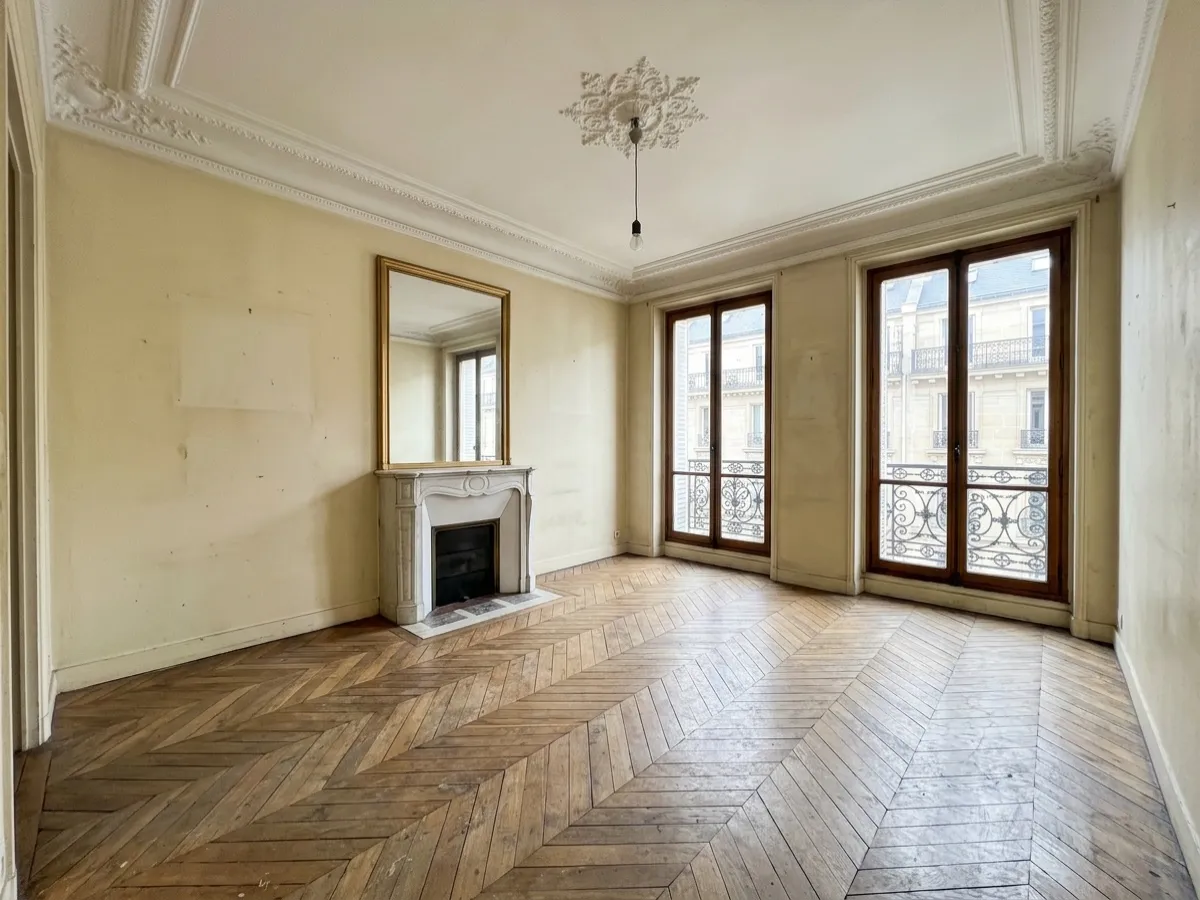 Original: kept and published next to the staged version (AI-generated illustration)
 Virtually staged: furniture only. Fixtures, views and defects stay as they are
Myths that keep getting copied
Each of these appears in currently-ranking vendor content, usually word-for-word across several sites — which tells you how the copying happened.
- "NAR SOP 12-5 requires disclosing edited photos." False. Standard of Practice 12-5 concerns disclosing the firm name in advertising. The correct hooks for photo manipulation are Article 12's "true picture" language and SOP 12-10(2)'s ban on manipulating content to produce "a deceptive or misleading result."
- "The FTC requires virtual staging disclosure." There is no staging-specific FTC rule. The FTC's authority here is the general deceptive-advertising prohibition (FTC Act Section 5), which contains no photo-labeling requirement.
- "Article 04.04 requires…" quoted as if it were national. Article 04.04 is one MLS's rulebook — Stellar MLS, in Florida. It gets copied because Stellar is big, but it binds nobody outside Stellar's territory.
- "38 states require disclosure." The number circulates with no citation anywhere. As of July 2026, exactly two states have statutes: California (in force since January 2026) and Wisconsin (from January 2027).
Frequently asked questions
Is virtual staging legal?
Yes, in both the US and the EU — when disclosed, and when the edits stay within limits: furniture in, structure, views, and defects untouched. No US authority bans the practice; every rule on this page governs how it must be disclosed. The one categorical prohibition worth knowing: Stellar MLS bans virtual staging on pre-construction and under-construction listings outright.
Do you have to disclose virtual staging?
Almost certainly yes. REALTORS® owe NAR's "true picture" standard; California requires disclosure by statute since January 1, 2026, with Wisconsin following January 1, 2027; and nearly every MLS rulebook examined here requires some form of it — the loosest, NorthstarMLS, still calls it a best practice. In the EU, AI-modified listing images must carry a visible and machine-readable label from August 2, 2026.
Where does the virtual staging disclosure have to go?
It depends on your MLS's school: the remarks field (CVR), a photo caption plus a fixed remarks sentence (Stellar), a watermark on the image itself (ARMLS, Canopy), or next to the published original (CRMLS). California adds a statute-level rule across all marketing channels: on or adjacent to the image, plus a link or QR code to the original. The four schools don't conflict, so the cautious play is to do all four at once.
What happens if you don't disclose virtual staging?
It depends on who catches you. Your MLS can pull the images and fine you — Stellar issues an automatic Level I fine, ARMLS $200 per violation from December 2026. A NAR ethics hearing can warn, fine, suspend, or expel you from the association. A state regulator can discipline your license under misrepresentation rules. And in California, a knowing violation of AB 723 is a misdemeanor.
Does the EU AI Act apply to real estate photos?
Yes. Article 50 of Regulation (EU) 2024/1689 covers AI-generated or AI-modified realistic imagery, and a listing photo that AI has furnished or redecorated qualifies. From August 2, 2026, such images must carry a label that is both visible and machine-readable, uniformly across every EU member state.
What to do this week
Label the image, keep the original, say it in the remarks, touch only the furniture — that combination is designed to satisfy every rule cited above. Then spend ten minutes finding your own MLS's photo policy and matching it to one of the four schools; given the timeline, assume it's stricter than the last time you read it. (This is general information, not legal advice.)